
On Enriched Doughs
with tips + recipes for cozy baking

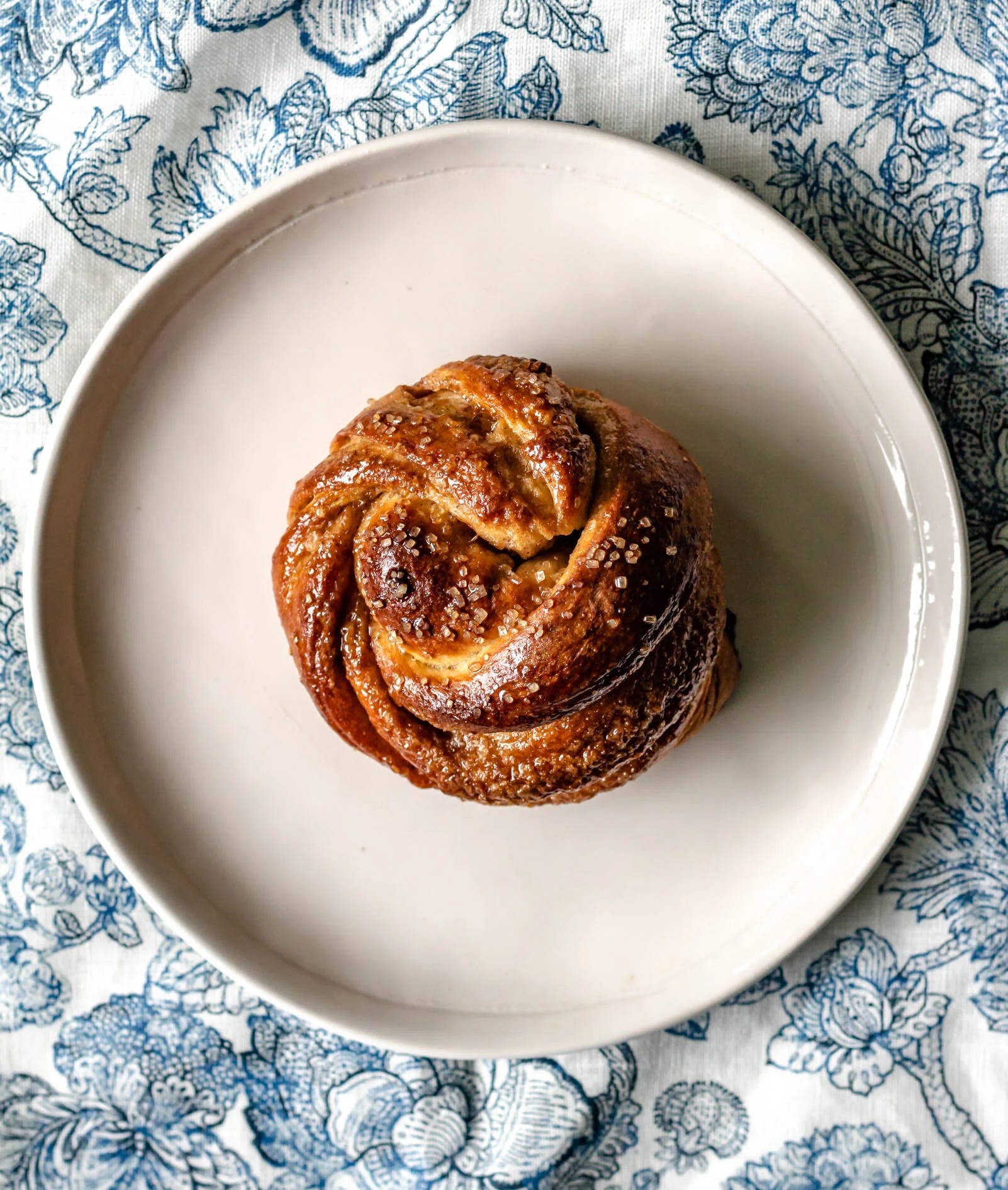
It’s very cold outside, which means that while my yard is covered in sheets of crunchy, frozen snow, you will find me inside baking something warm and cozy, rich and decadent— and that often means an enriched dough.
Yeasted doughs fall into two categories—lean doughs and rich doughs. Lean doughs are those made with your base dough ingredients: flour, water, yeast, and salt. These are your traditional bread doughs—sourdough, ciabatta, artisan dinner rolls, etc. (Occasionally, in a dough like pizza dough or pita, you’ll find a trace of olive oil but not in large quantities). Enriched doughs, on the other hand, have lots of added ingredients that make them, you guessed it, richer: eggs, milk, sugar, and butter are added to soften and sweeten the dough, turning crunchy crusts into soft, pillowy interiors. This category includes the generic sweet dough (often used in cinnamon rolls), brioche, and challah.
little side note: This big category of doughs is called viennoiserie which translates to ‘from Vienna’ and it’s a category that bridges the worlds of baking (boulangerie) and pastry (patissiere). Croissants and danishes also technically fall into this group, but they are also laminated which kind of deserves its own spotlight, so I won’t be digging into those today.
The biggest thing to note when adding rich ingredients to bread dough is that all of these ingredients (eggs, milk, sugar, and butter) play a role in inhibiting gluten formation, which in turn creates a dough with a softer crumb. If you remember from our deep dive on flour, as a dough is hydrated and mixed, the proteins found in flour begin to unfurl and link together to create a strong network of gluten that provides structure and binding to your baked goods. The more you mix, the stronger your gluten network becomes. The added ingredients in enriched doughs contain fat which coats those protein strands making it more difficult for them to form strong gluten formations. This means that most enriched doughs undergo a longer (and often slightly differently ordered) mixing than lean bread doughs.

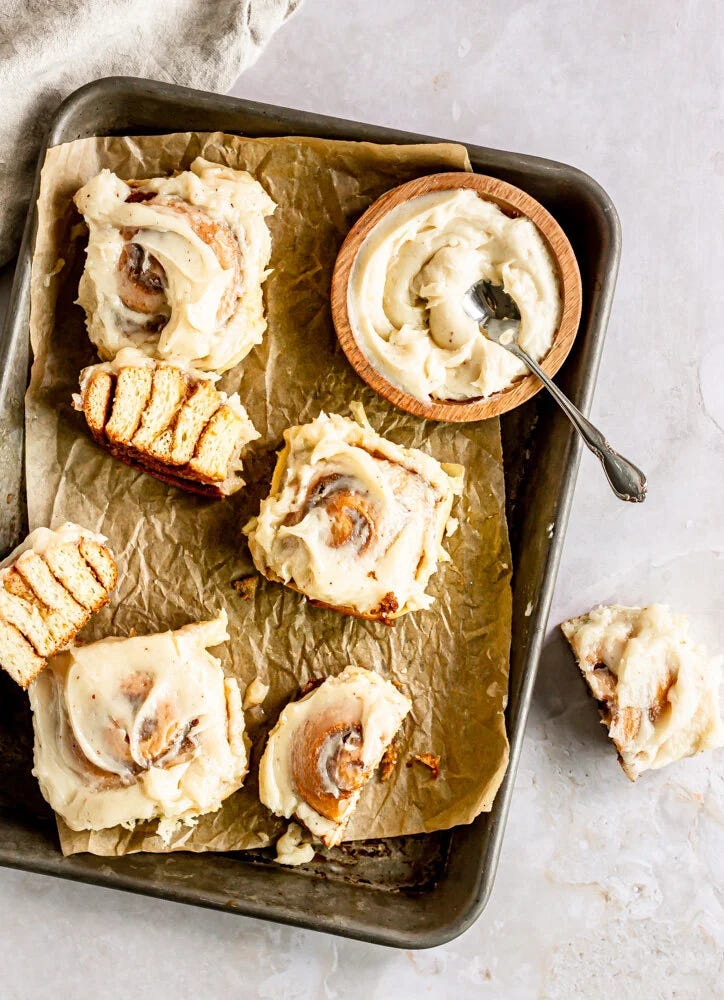
a few tips for working with enriched doughs
In order to determine ‘doneness’ when it comes to mixing an enriched dough, use the window pane test. To use it, pull a piece of dough from your bowl and stretch it between your fingers in the shape of a small square. If the dough rips in your fingers, the gluten network is insufficiently developed and you’ll need more mixing. If the gluten network is strong, however, the dough should stretch and become thin and transparent enough that it mimics looking out of a window.
Enriched doughs generally benefit from a longer (and colder proofing time). Sugar affects yeast fermentation so doughs with added sugar often need a bit more time to proof. I also like to incorporate a cold proof, which gives the dough a long (usually overnight) rest in the refrigerator. This allows flavor to develop a bit more deeply and I find that slightly colder dough is easy to work with when it comes to filling and shaping as you’re not as worried about warm butter melting and creating a sticky mess.
Use ingredients that are the same temperature. Temperature makes a big difference in enriched doughs—especially brioche! Brioche dough uses a method in which a détrempe or dough base is mixed with everything except the butter. The softened butter is then added, piece by piece, and until incorporated fully and then the dough undergoes a looooong knead to develop the gluten network. This is because brioche has a very high butter content (can be up to 80%, but typically 40-60%) and the flour needs to hydrate slightly and begin building gluten before being coated in the fat from butter. If the butter used in a brioche method recipe is not the same temperature as the dough, it won’t incorporate correctly, leaving you with a rough or clumpy dough instead of something soft and pillowy.
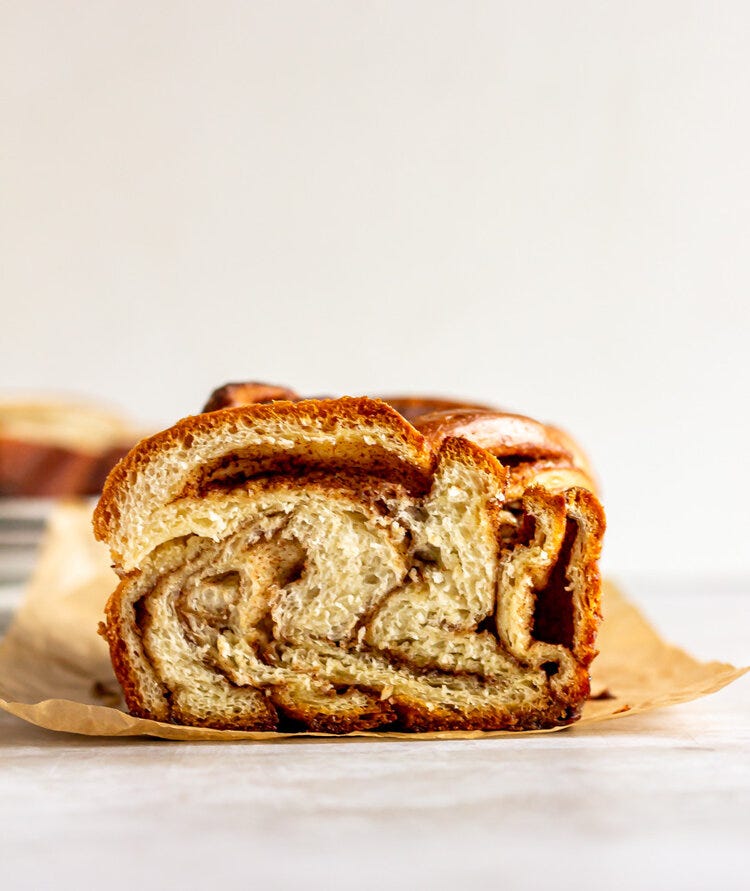
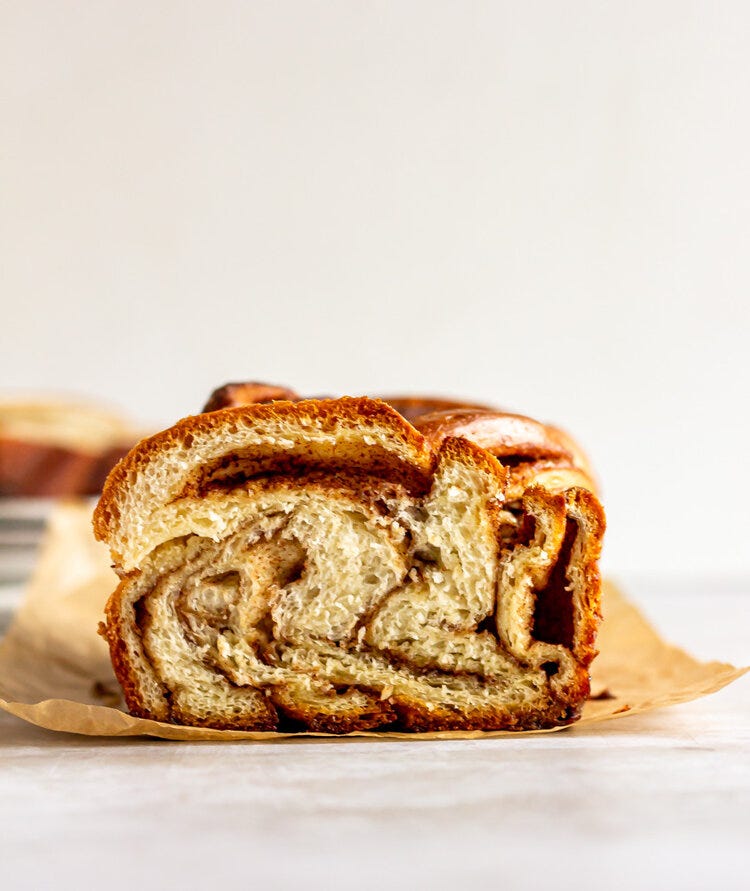
Play! As enriched doughs are often filled, it’s easy to play around with flavors, fillings and glazes. Try making a batch of cinnamon rolls with your favorite challah dough or filling a basic brioche dough with cinnamon sugar or nutella and braiding like a babka or tea ring. There are so many options!
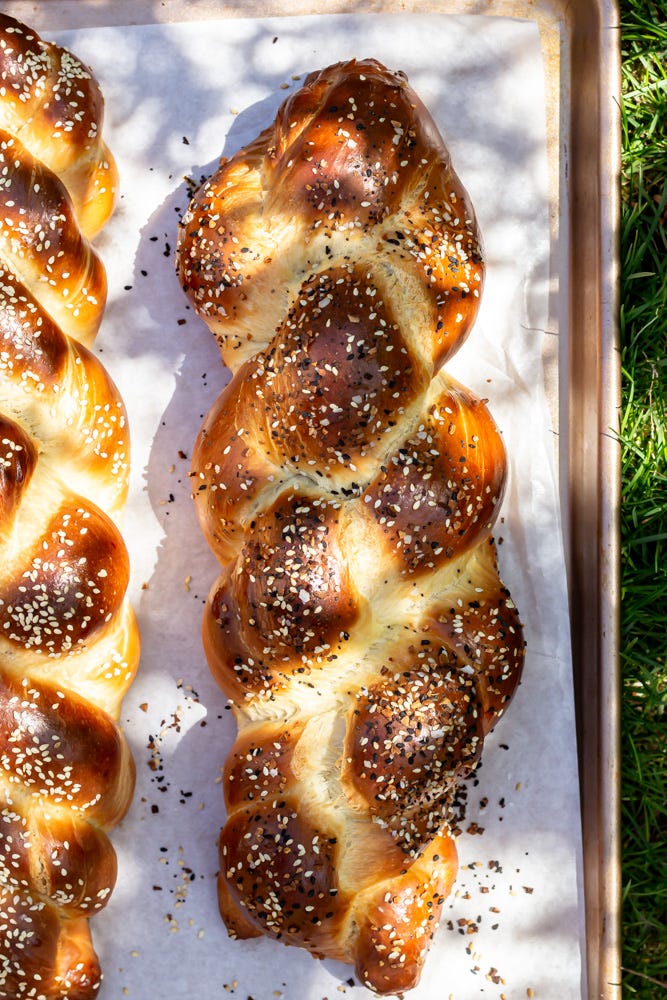
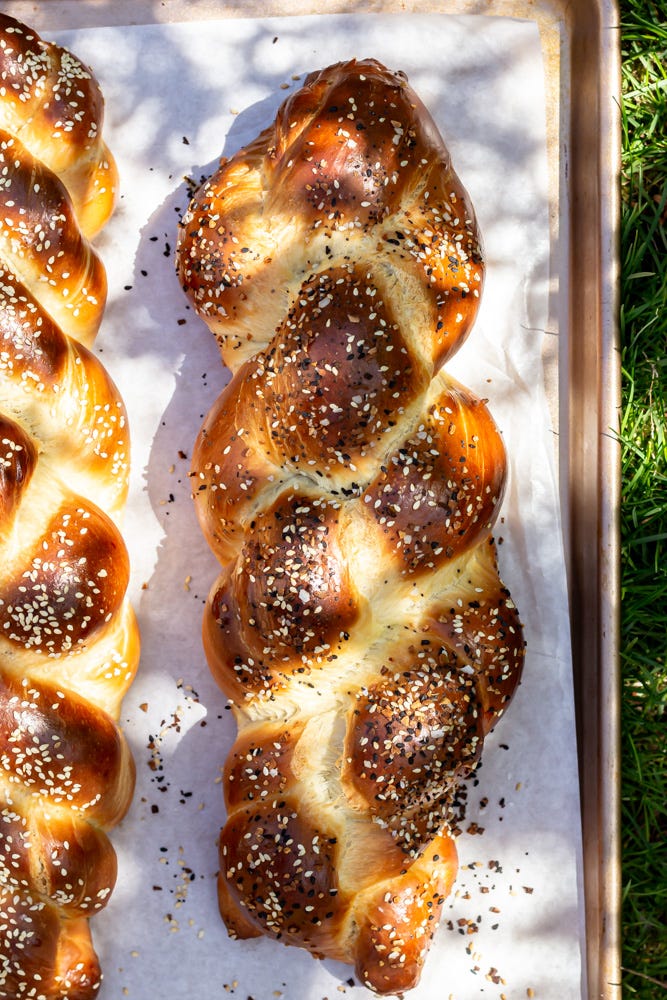
buttermilk challah a few enriched dough recipes to get you started
ROASTED GARLIC AND OLIVE OIL HAMBURGER BUNS
Thanks for the deep dough! I haven't read much about enriched doughs and what you've outlined hear is very interesting. I have heard of the windowpane test though.