
On Chiffon Cake
a fancy little sponge

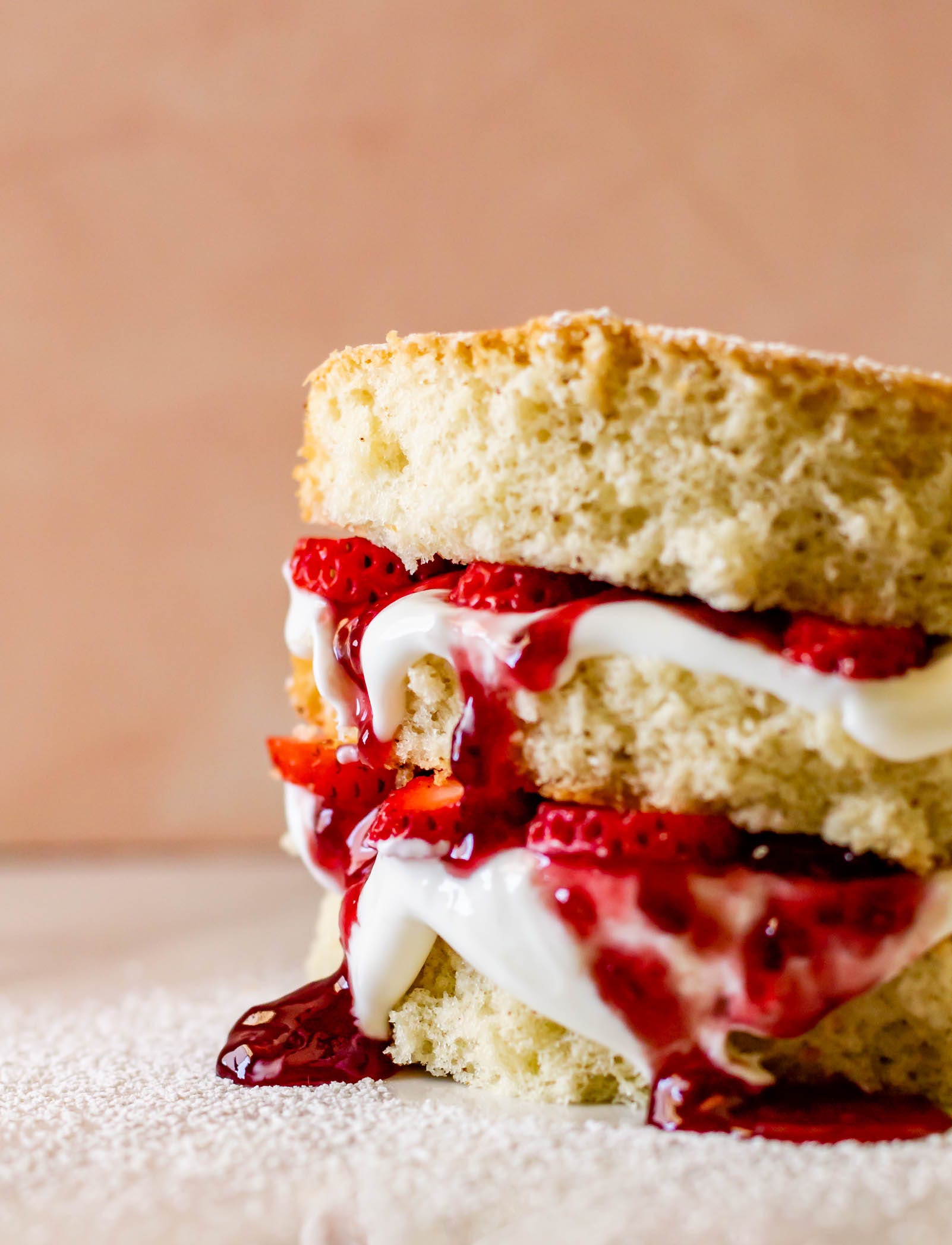
I couldn’t create a series of cocktail-inspired recipes without including the only cake batter I know of that features bubbles—the chiffon cake.
In one of my cakes classes in pastry school, we spent each week learning the history and methodology behind some of the most popular cake batters. We played around with yeasted cakes, became professionals at high-ratio cakes and folded egg whites into sponge cake batters until we developed tennis elbow. But my favorite cake was the chiffon cake, because as my professor taught us, it included champagne in the batter. Not only was the cake light and airy, but it also felt a little opulent.
Fast forward a bit and I did a little research to refresh my memory on the history of the chiffon cake—it’s a little theatrical with secret recipes and a cult-like celebrity following— and imagine my surprise when I couldn’t find a single source or recipe that mentioned the addition of champagne. I guess my professor took some creative liberties, but because of that, every chiffon cake I’ve ever made incorporates something bubbly and I’m not interested in stopping that now.
The traditional chiffon cake was created in Los Angeles in the 1920s by a man named Harry Baker (an appropriate name). He obsessively tinkered with ingredients until he developed a cake that was both light and spongy, yet silky and buttery in texture. It became famous among the Hollywood elite and he guarded the recipe closely, even going as far as to dispose of his own garbage so his ingredients wouldn’t be discovered.
In the 1940s, Baker sold his recipe to Betty Crocker making it accessible to the masses where it was dubbed the “first new cake in 100 years”.
Baker’s secret recipe included two components: first, he used vegetable oil in place of butter, for a rich, ultra-moist texture, and then he whipped egg whites with sugar and folded it into the batter (like an angel food cake) for maximum airiness. And the third, unofficial component to a chiffon cake in my rendition is champagne/prosecco/seltzer, which creates another layer of air pockets in the batter, both softening and lightening the final cake.
chiffon cake methodology
The chiffon cake falls under the ‘egg foam cake’ umbrella meaning that its mixing method includes whipping eggs to trap air for much of their leavening. It’s closely related to the the angel food cake and the genoise sponge with a few key differences. All sponge cakes contain little to no fat, making them a little tougher and more durable—perfect for layering with mousses and creams or rolling into roulades. The angel food cake contains no fat at all and relies on a whipped egg white foam for its leavening. The genoise sponge utilizes a whipped whole egg foam and usually contains a small amount of butter incorporated at the very end of mixing. And the chiffon cake is somewhat of a combination of the two—it features both a whipped egg white foam and a fat in the batter.
a quick note: While you often see chiffon cakes baked in a tube pan similar to an angel food cake, it is not a necessary feature. Angel food cakes contain no other leavening agent and rely on an un-greased, straight-sided pan that the protein strands in the egg white foam can kind of climb up as it bakes. Chiffon cakes, on the other hand, incorporate baking powder so its a little less finicky when it comes to its rising criteria.
Using a liquid fat like vegetable oil instead of butter gives a rich texture, softer than a traditional creaming-method cake and contributes moisture for days.
To make a basic chiffon cake base, a batter is made by streaming the liquid ingredients (oil, egg yolks, bubbles, flavorings, etc) with the dry ingredients. Then, whipped egg whites are gently folded in, taking care to deflate the air bubbles as little as possible.

Even if the addition of champagne isn’t a standard chiffon cake component for the rest of the world, it is for me and you know you’ll be getting a classic cocktail-inspired chiffon cake recipe in your inboxes next week, so get the bubbles ready! :)